

If you’ve glanced at your boiler and noticed the pressure gauge creeping down again, you’re not alone. It’s one of the most common calls we get from homeowners, often after they’ve already topped it up once or twice. Sometimes it’s something simple. Other times it points to a bigger issue that needs proper attention, especially if you’re worried about a potential boiler leak repair.
Boiler pressure matters because your heating system relies on it to push hot water around your radiators and through your taps. Too low, and your boiler may stop working altogether. You might see an error code, hear gurgling from the pipes or find that your radiators are lukewarm at best.
Let’s talk through why it happens, what you can safely check yourself and when it’s time to get a heating engineer involved.
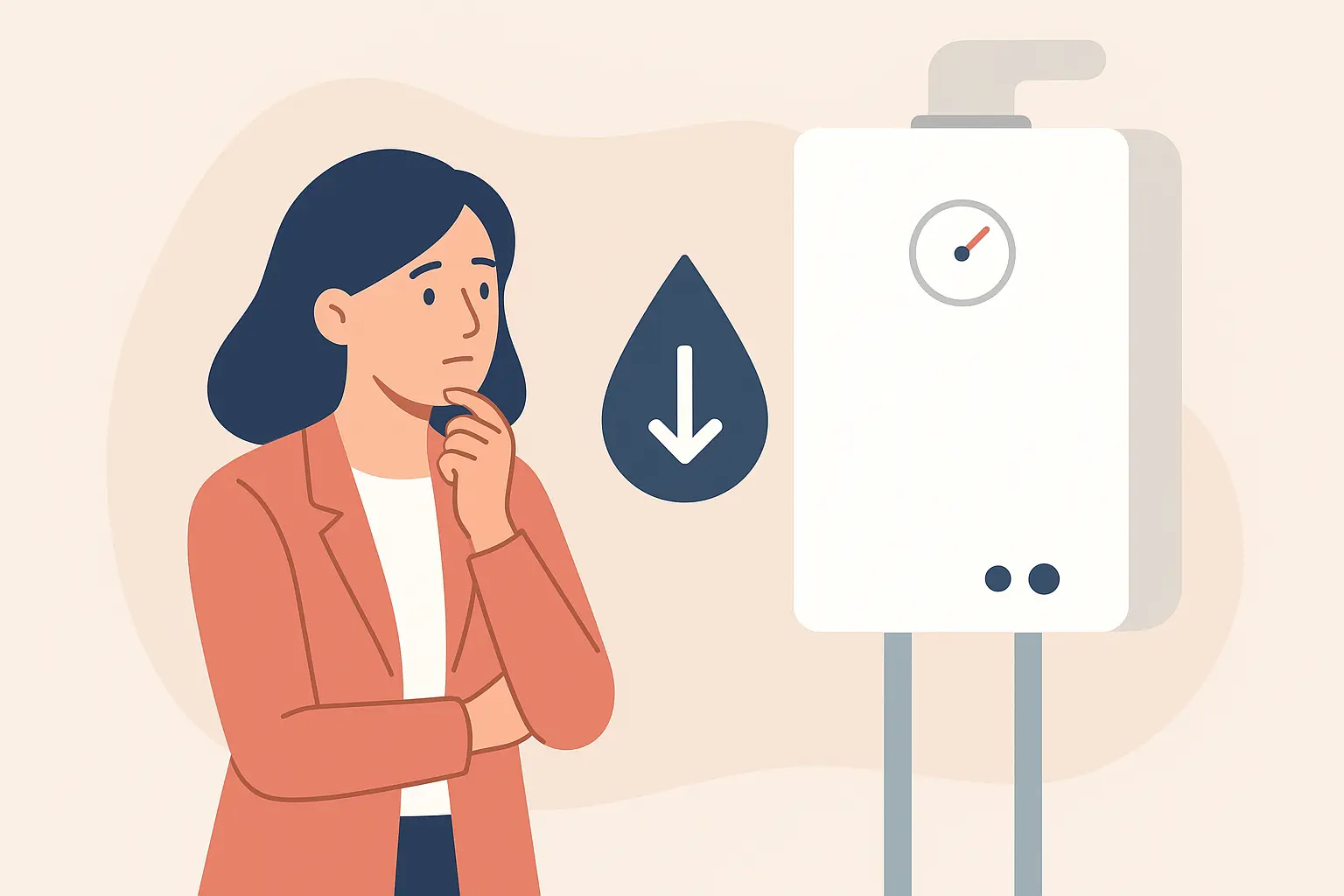
Why boiler pressure matters and the warning signs to watch for
Most modern combi boilers should sit between 1 and 1.5 bar when the system is cold. If it drops below 1 bar, you’ll usually notice something isn’t right.
Common warning signs include:
- The pressure gauge sitting below 1 bar
- Your boiler locking out and showing a fault code
- Radiators slow to heat or cold at the top
- Banging or gurgling noises in the system
- Needing to top up the pressure regularly
It’s normal for the pressure to rise slightly when the heating is on and drop a little when it cools down. What’s not normal is having to re-pressurise it every week.
Top reasons your boiler pressure keeps dropping
1. A leak somewhere in the system
The most obvious cause is a leak. That could be from a visible pipe joint, a radiator valve or somewhere less obvious like under floorboards. In older terraces around Derby and Nottingham, we occasionally find very slow leaks on pipework hidden under suspended timber floors.
If you spot damp patches, staining on ceilings below bathrooms or constantly have to top up the pressure, it’s worth getting it checked properly.
2. Recently bled radiators
Bleeding radiators releases trapped air which is good for efficiency, but it does reduce system pressure. If you’ve just done this and now your boiler is showing low pressure, that’s likely the reason.
You can usually fix this by topping it up using the filling loop, as long as everything else is sound.
3. A faulty pressure relief valve
Your boiler has a safety device called a pressure relief valve. If the system pressure gets too high, it releases water outside through a small copper pipe, usually pointing towards the ground.
If this valve is faulty or has debris stuck in it, it can weep water and slowly drop your pressure over time. You might notice water dripping outside on the pipe when the heating is running.
4. Expansion vessel issues
This is something we see quite often during callouts in places like Derby and Nottingham. Inside your boiler is an expansion vessel that helps regulate pressure changes.
If it loses its air charge or the internal diaphragm fails, the pressure can fluctuate wildly and eventually drop too low. This isn’t a DIY fix and needs proper testing.
5. Small internal boiler leaks
Sometimes the leak is actually inside the boiler casing. You may not see water immediately, but over time components can corrode or seals can fail. This is especially common in older boilers that haven’t been serviced regularly.
How to check, fix and prevent pressure loss safely
Before you pick up the phone, there are a few safe checks you can do yourself.
Check the pressure gauge
Make sure you’re reading it when the system is cool. If it’s just under 1 bar, it may only need topping up.
Top up the pressure
Use the filling loop, usually a flexible silver hose under the boiler. Open both valves slowly and watch the gauge rise. Stop once it reaches around 1.2 to 1.5 bar and close the valves firmly.
Only do this occasionally. If you’re repeating it often, there’s an underlying problem.
Look for visible leaks
Check around radiators, valves and exposed pipework. Run a dry piece of kitchen roll along joints to spot tiny drips. Also have a look outside at the pressure relief pipe when the heating is on.
Bleed radiators correctly
If you’ve had cold spots, bleed the radiators first, then check and adjust the boiler pressure afterwards. Doing it the other way round will just mean topping up twice.
Regular annual servicing helps catch small issues before they turn into bigger ones. In areas like Duffield, we often find pressure problems during routine services where homeowners hadn’t yet noticed anything wrong.
When to call a professional heating engineer
If your boiler pressure keeps dropping despite topping it up, or you suspect a hidden leak, it’s time to get it checked properly.
You should also call an engineer if:
- The boiler repeatedly locks out
- You see water inside or underneath the boiler casing
- The pressure rises rapidly when the heating is on then drops again
- The pressure relief pipe is constantly dripping
Boilers are sealed systems and modern components are sensitive. Guesswork can lead to more damage and higher repair costs. A proper diagnosis means pressure testing the system, checking the expansion vessel and making sure safety devices are working as they should.
If you’re based in Derby, Nottingham, Duffield or nearby villages and you’re fed up with topping up your boiler every few days, Martyn Young Heating can help you get to the bottom of it properly and safely.
Contact us today to arrange your boiler repairs or get in touch for a quote on a new boiler and installation.